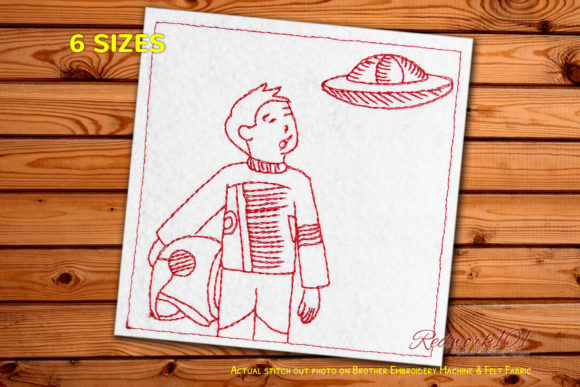
Astronaut in Space Suit with Helmet Design Review
As an embroidery designer who has spent years digitizing and reviewing files for commercial use, I approach every new machine embroidery design with a critical eye toward its viability in the real world. It is not enough for a graphic to look good on a screen; it must hold up under the needle, survive industrial washing, and effectively communicate a brand's message. Today, I am reviewing the Astronaut in Space Suit with Helmet, a file that sits squarely in the Work category but offers far more potential than standard corporate imagery. This review is tailored for small business owners, apparel decorators, and Etsy sellers looking to elevate their small business merch with something distinct yet professional.
First Impressions and Visual Personality
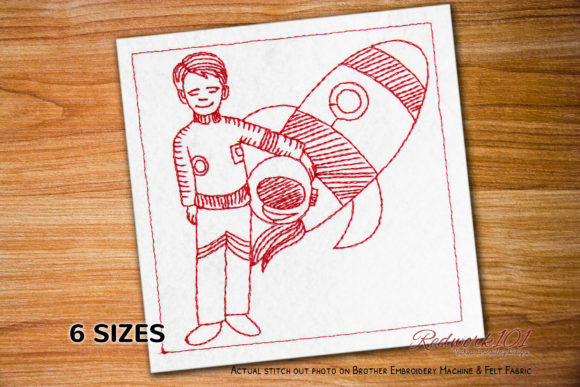
Upon loading the digital embroidery file for the Astronaut in Space Suit with Helmet, the immediate impression is one of bold exploration mixed with technical precision. Unlike generic clip art, this design carries a sense of adventure that feels both modern and timeless. The inclusion of the helmet adds a layer of anonymity and universality, making it an excellent candidate for representing a team rather than a specific individual. The description notes that the "Box Stitch" shown in preview images is optional, which is a crucial detail for us as designers. This flexibility suggests the digitizer understands that context matters; sometimes you need a framed badge, and other times you need a floating graphic.
The aesthetic leans towards the playful yet serious side of Work. It is not overly rustic or handmade in a rough sense, but rather possesses a clean, engineered look that translates well to custom apparel. For a boutique or creative studio, this design signals innovation. For a local café or bakery, it might seem unexpected, but that is exactly where its power lies—it breaks the monotony of standard coffee cup or wheat stalk logos, creating a memorable visual hook for customers.
Real-World Business Applications
The true test of any embroidery file is its versatility across different products. The Astronaut in Space Suit with Helmet shines when applied to diverse substrates. For staff uniforms, particularly in tech-forward companies or creative agencies, this design works beautifully as a chest logo accent. It adds personality to a standard polo without sacrificing professionalism.
In the realm of embroidered patch creation, this design is a standout. Patches are currently a massive trend in small business merch, and an astronaut motif allows brands to create collectible items for their customers. Imagine a skate shop or a streetwear brand releasing a limited run of astronaut patches; the appeal is immediate. Furthermore, for cap embroidery, the compact nature of the suit and helmet fits well on the front panel, provided the width is adjusted correctly. The helmet's curve can mirror the curve of the cap, creating a harmonious layout.
For retail environments, consider tote bag design. A tote featuring this astronaut becomes a statement piece, transforming a simple grocery carrier into a conversation starter. In the context of apron embroidery for a modern bistro or a craft brewery, this design suggests that the staff are "explorers" of flavor or craft, adding a narrative layer to the employee's role. Even as a subtle sleeve detail on a work shirt, it serves as a unique identifier that fosters team cohesion.
Technical Considerations for Production
While the artistic merit is high, we must address the technical execution to ensure a high-quality finished product. The description mentions that the color of the outer box differs in most designs unless it is part of the design itself, and that you can skip it. This is a vital instruction for production efficiency. When stitching on dark uniforms, relying on the fabric as the background (skipping the box) can save thread and reduce bulk, but it requires careful consideration of contrast. If the suit colors blend into the garment, the optional box stitch might actually be necessary to define the edges.
One must be cautious regarding stitch density. Space suits often involve complex shading and metallic-looking threads to simulate visors and equipment. If the density is too high, the design may become stiff and prone to puckering, especially on stretchy fabrics like jersey knits used for t-shirts. Conversely, if the density is too low, the coverage may be poor, revealing the fabric texture underneath in an unprofessional way. Before running a full production batch, it is imperative to test the design on the actual material you intend to use.
Another critical factor is the hoop size. Since the specific dimensions are not listed in the product description, you must verify this before purchasing. If your primary goal is creating small patches for hats or keychains, a large hoop requirement could be a dealbreaker or require expensive re-digitizing. Always confirm that the file fits within your machine's capabilities or your client's desired placement area.
Brand Identity and Customer Perception
Integrating the Astronaut in Space Suit with Helmet into your catalog can significantly impact brand identity. In a market saturated with floral and geometric patterns, an astronaut stands out. It conveys a message of looking forward, aiming high, and exploring new frontiers. For a handmade product seller, using this design on packaging accents or as a thank-you gift for loyal customers reinforces the idea that your brand is innovative and thoughtful.
Customer trust is often built on consistency and quality. A crisp, well-stitched astronaut logo on a uniform tells the customer that you pay attention to details. It elevates the perceived value of the service or product being offered. Whether used for event merch or as a permanent fixture on employee gear, this design helps create a visual consistency that makes your brand instantly recognizable. It moves beyond mere decoration to become a strategic design asset.
Practical Designer Notes and Recommendations
To ensure success with this file, I recommend following a strict workflow. First, test it in black and white or grayscale. This strips away the distraction of thread colors and allows you to see if the shapes and spacing hold up. Does the helmet distinguish itself from the suit? Are the details of the life-support pack clear?
- Check Scalability: Verify if the design remains legible at small patch sizes. Fine details in the visor or suit zippers may disappear if scaled down too far.
- Review Thread Colors: Ensure there is sufficient contrast between the suit, the helmet, and the background. You may need to swap suggested thread colors to match your specific brand palette.
- Inspect Spacing: Look for areas where stitches might bridge gaps improperly, causing thread breaks or bird-nesting.
- Stabilizer Selection: Choose the right stabilizer for your fabric. Cut-away is usually best for stretchy materials to prevent distortion over time, while tear-away might suffice for stable wovens.
- Create a Mockup: Before showing it to a client, generate a printable mockup. Visualizing the astronaut on a digital representation of a cap or tote helps sell the concept.
- Licensing Verification: Finally, and most importantly, confirm the commercial licensing terms. The description hints at flexibility with the box stitch, but you must ensure you have the rights to use this for commercial embroidery projects intended for resale.
In conclusion, the Astronaut in Space Suit with Helmet is a versatile and compelling choice for modern branding. It bridges the gap between fun and function, offering a unique visual language for businesses willing to step outside the ordinary. With proper testing and attention to the technical nuances of Embroidery production, this design can become a cornerstone of a successful merchandise line or uniform program.