Cute Birthday Girl: A Designer's Review for Business Merch
As an embroidery designer who spends most of my days digitizing and testing files for commercial use, I approach every new machine embroidery design with a critical eye. It is not just about whether a file looks pretty on a screen; it is about how that digital embroidery file translates into a tangible asset for a small business. Today, I am reviewing the "Cute Birthday Girl" Redwork Design. While the title suggests a niche focus on Birthdays, my evaluation focuses on its potential utility for branded merchandise, staff uniforms, and boutique product lines.
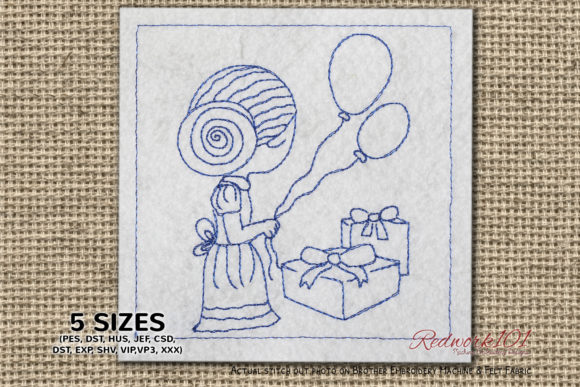
The first impression of this design is undeniably friendly and playful. The term "Redwork" immediately signals a specific aesthetic: classic, rustic, and reminiscent of vintage hand-stitching. In the current market, where consumers crave authenticity, this style offers a distinct advantage over hyper-realistic or overly glossy modern designs. It feels handmade, which aligns perfectly with the values of Etsy sellers, crafters, and local boutiques. However, for a professional embroiderer, the simplicity of Redwork requires careful scrutiny regarding stitch density and application versatility.
Evaluating Visual Personality and Brand Fit
The core appeal of the "Cute Birthday Girl" lies in its simplicity. Redwork typically utilizes a single thread color, often red, against a neutral background. This creates high contrast and excellent readability. For a business owner, this means the design can serve as a strong visual anchor without overwhelming the garment. It projects a brand identity that is approachable, nostalgic, and warm. If you run a bakery, a florist, or a children's boutique, this design reinforces a narrative of care and tradition.
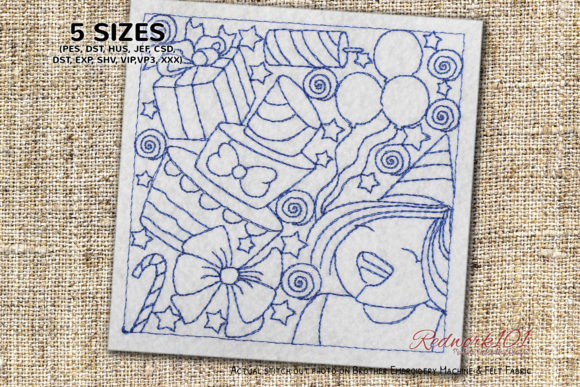
However, we must address the description note regarding the optional box stitch. The product details state that the box stitch shown in pictures is optional and that the outer box color often varies. From a branding perspective, consistency is key. If you are using this as a logo accent on staff aprons or tote bags, you need to decide immediately whether to include the border. A border can frame the design nicely on a finished product, but removing it might offer more flexibility when placing the graphic on curved surfaces like cap fronts or near seams on shirts.
Real-World Applications for Small Business Merch
Let us imagine a scenario where a local creative studio wants to create limited-edition small business merch for a client appreciation event. The "Cute Birthday Girl" could be transformed from a birthday-specific graphic into a general symbol of celebration if used creatively. Here is how I see it performing in various commercial contexts:
- Embroidered Patches: This is arguably the strongest use case. Creating a sew-on or iron-on patch allows the business to apply the design to denim jackets, canvas bags, or hats without committing to direct embroidery on the final garment. The Redwork style shines here, as the single-color stitching reduces production costs while maintaining a premium, artisanal look.
- Apron Embroidery: For cafes and bakeries, staff uniforms are a walking billboard. Placing this design on the chest or sleeve of an apron adds a touch of personality. The simplicity ensures it remains legible even after hundreds of wash cycles, provided the thread quality is high.
- Tote Bag Design: Canvas tote bags are staples for retail shops. The "Cute Birthday Girl" works well as a central motif or a corner detail. Because Redwork uses fewer stitches, it minimizes the risk of fabric puckering on lighter weight canvas.
- Cap Embroidery: Applying this to a structured cap requires caution. The curved surface of a cap front can distort wide designs. Since this is likely a compact Redwork piece, it should sit well, but the optional box might need to be removed to prevent edge distortion.
Technical Considerations for Production
Before running this embroidery file on your machine for a commercial order, there are several technical factors to verify. The product description mentions that the color of the outer box differs in most designs unless it is part of the design itself. This variability implies that the digitizer may have created multiple versions or that the preview images are illustrative. You must inspect the actual file layers before hooping.
Stitch density is generally lower in Redwork designs, which is beneficial for speed and fabric health. However, low density can sometimes lead to gaps in coverage if the fabric texture is loose or highly textured. I recommend testing the design on the exact fabric you intend to use. If you are embroidering on a thick towel or a fuzzy fleece, the single-run stitches of Redwork might get lost. Conversely, on smooth cotton or twill, the definition will be crisp.
Another critical factor is the hoop size. While Redwork designs are often small, you must confirm the dimensions fit your intended placement area, especially for small patches or pocket logos. Always use a proper stabilizer; even though the stitch count may be low, skipping stabilizer on stretchy fabrics like t-shirts can result in a warped finished product.
Strategic Placement and Limitations
While versatile, this design is not suitable for every application. If your business requires tiny lettering or intricate details within the character, Redwork might be too simplistic to convey complex information. Furthermore, if you are working with dark uniforms, remember that traditional Redwork relies on light fabric for contrast. You would need to ensure the thread color chosen provides sufficient pop against dark backgrounds, or consider using a backing material to prevent the fabric color from showing through the sparse stitching.
For businesses focusing on custom apparel for corporate clients, ensure the "birthday" theme does not limit the lifespan of the merchandise. Unless the client specifically requests birthday-themed gear, consider marketing this as a "celebration" icon to broaden its appeal beyond annual events.
Impact on Brand Identity and Customer Trust
Using a cohesive set of design assets like the "Cute Birthday Girl" can significantly enhance brand recognition. When customers see a consistent, high-quality embroidered mark on your packaging, bags, or staff uniforms, it signals professionalism. It tells the customer that you value quality and attention to detail. In the era of mass-produced goods, a genuinely embroidered item stands out as a handmade product of value.
This design can also serve as an excellent tool for buyer engagement. Imagine including a small embroidered patch as a free gift with purchase for loyal customers. It creates an emotional connection and encourages social media sharing. A well-executed printable mockup showing this design on various products can help you pre-sell items or secure client approval before production begins.
Final Designer Notes and Recommendations
To maximize the potential of the "Cute Birthday Girl" for your business, follow these practical steps:
- Test in Black and White: Before committing to colored thread, stitch the design out in black on white fabric. This reveals the true structure and spacing of the stitches without the distraction of color.
- Verify Commercial Licensing: The product description does not explicitly detail license terms. Always confirm with the seller that the file includes a commercial license allowing you to sell physical goods made with the design.
- Check File Formats: Ensure the downloaded digital embroidery file is compatible with your specific machine brand (e.g., PES, DST, EXP).
- Create Client Mockups: Use software to place the design beside other brand assets to ensure visual consistency.
- Inspect Thread Contrast: If skipping the optional box, ensure the remaining elements stand out clearly against your chosen fabric color.
In conclusion, the "Cute Birthday Girl" Redwork Design is a charming asset that, when used strategically, can elevate a small business's merchandise line. Its vintage aesthetic and simple construction make it ideal for patches, aprons, and boutique gifts. By paying attention to fabric choice, stabilizer use, and licensing details, embroidery professionals can turn this cute graphic into a profitable and recognizable element of their brand's visual identity.