Digital Piano Redwork: A Craft Fair Seller's Review
As an embroidery designer who spends weekends behind a booth table and weekdays digitizing files, I know that not every machine embroidery design translates well from a screen to a physical craft fair product. When I first pulled up the Digital Piano Redwork file on my workstation, my immediate thought was about its potential as a high-converting handmade product for music lovers. This isn't just a digital asset; it is a potential bestseller for your Etsy shop or local market stall if positioned correctly.
First Impressions and Visual Mood
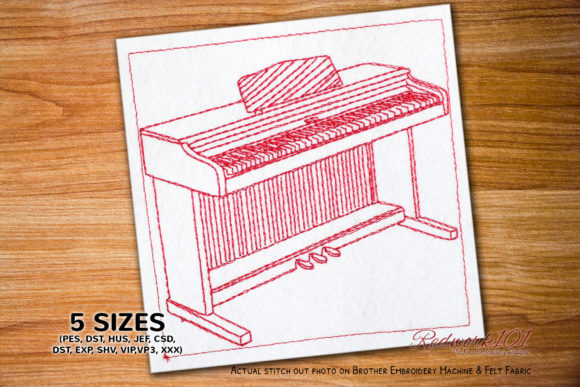
The aesthetic of Digital Piano Redwork strikes a perfect balance between modern minimalism and nostalgic charm. The "Redwork" style inherently suggests a farmhouse or vintage vibe, which is currently dominating the home decor and gift markets. However, because the subject is a digital piano rather than a grand acoustic one, it bridges the gap between traditional craft and contemporary music culture. It feels bold yet soft, decorative but not overly fussy. For a boutique maker, this duality is gold. It appeals to the classically trained pianist who loves rustic decor just as much as the synth-pop enthusiast looking for something unique.
When evaluating this for a weekend display, the simplicity of the line work is its greatest strength. In a crowded booth filled with colorful items, a clean, single-color or two-color design often stops the eye faster than complex, multi-threaded pieces. It screams "quality" without shouting for attention.
Product Versatility and Placement
The real test for any embroidery file is how it performs across different substrates. Here is how Digital Piano Redwork stacks up on various items you might produce:
- Tote Bags and Market Bags: This is arguably the strongest application. A large-scale version of the design centered on a natural canvas tote bag design creates an instant statement piece. Music teachers and students love carrying their sheet music in style.
- Aprons and Kitchen Towels: For apron embroidery, placing the piano motif on the bib or lower pocket adds a whimsical touch for the musical chef. Similarly, tea towel embroidery benefits from the open nature of redwork, allowing the texture of the waffle or linen weave to show through.
- Caps and Patches: On a curved cap surface, you must be careful with density. If the design has long runs, they may pucker. However, as an embroidered patch applied to a denim jacket or backpack, this design shines. It becomes a badge of honor for musicians.
- Pillow Covers and Pouches: Small fabric pouches for earbuds or metronomes are excellent small shop product ideas. The design acts as a focal point without overwhelming the small surface area.
Production Practicality for Batch Selling
For those of us running a business, time is money. Digital Piano Redwork appears to be highly repeatable for batch production. Because redwork typically utilizes fewer thread changes and less dense stitching, you can hoop multiple items or run a continuous job with minimal intervention. This efficiency is crucial when preparing inventory for a holiday market or fulfilling a sudden rush of Etsy seller orders.
Photographically, this design is a dream. It creates high contrast in printable mockup scenarios, making your online listings pop. Whether you are selling the digital embroidery file itself or the finished product, the clean lines translate beautifully to social media feeds where detailed textures often get lost.
Critical Considerations for Execution
While the design is promising, a professional review must address potential pitfalls. You need to exercise caution regarding stitch density. If the file includes the optional box stitch mentioned in the description, ensure it doesn't become too heavy on lightweight fabrics like tea towels. On thick fabrics, verify that the needle penetrates cleanly without causing puckering.
Pay close attention to the following technical aspects before mass production:
- Fabric Texture: Highly textured towels can obscure fine details. Test the design on the exact fabric you intend to sell.
- Thread Colors: While "Redwork" implies red thread, do not feel limited. Black, navy, or even metallic gold threads could elevate the commercial embroidery appeal for different customer demographics.
- Curved Surfaces: If applying this to caps, the horizontal lines of the piano keys must be short enough to avoid distortion on the curve.
- Scaling: Ensure the design retains clarity when scaled down for small pouches. Tiny details can merge into a blob if the resolution or stitch count is too low for the size.
Maximizing Customer Engagement
In a live sales environment, Digital Piano Redwork serves as a conversation starter. It signals to the buyer that you understand their specific passion for Music and Embroidery. It adds perceived value to your brand, suggesting that you curate designs with intention rather than just uploading random clipart. This consistency builds trust and encourages repeat buyers.
Furthermore, the optional nature of the outer box stitch offers customization opportunities. You can offer customers a choice: the framed look for a more formal appearance on pillow covers, or the skip-the-box version for a floating, modern look on tote bags. This level of customization is a powerful sales tool for handmade entrepreneurs.
Final Designer Notes and Checklist
Before you commit to producing a full line of goods based on this file, adhere to these professional standards. First, always test the design on scrap fabric identical to your final product. Check the thread contrast against your fabric choices; a dark thread on a dark fabric will render the design invisible. Review the spacing between the piano keys to ensure they don't fill in during washing.
Confirm your hoop size capabilities. If the design is large, ensure you have the appropriate hoop to stitch it in one go, as re-hooping can lead to alignment issues. Inspect the stitch density settings in your software; you may need to lighten the underlay for stretchy fabrics. Always use the right stabilizer—cut-away for garments that will be washed frequently, and tear-away for stable home decor items.
Create at least one real physical mockup to photograph for your marketing materials. Compare how the design looks on white versus cream versus colored fabrics to determine your best sellers. Finally, and most importantly, confirm the commercial licensing terms included with the design assets. Since the description notes that the box stitch color varies and is optional, ensure you understand the rights to modify and sell the finished goods derived from this file.
By treating Digital Piano Redwork not just as a file but as a strategic product component, you can create a cohesive, attractive, and profitable collection for your next craft fair or online launch.