Review: Jumping Horse and Jockey Redwork Design
When I first pulled up the Jumping Horse and Jockey Redwork file on my screen, I wasn't looking for flashiness. As a designer who spends more time troubleshooting thread breaks than admiring digital previews, I look for utility. Does this machine embroidery design hold up under the needle? Will it sell on a tote bag, or will it get lost in the texture of a sweatshirt? This specific design caught my eye because redwork—the art of single-color stitching, traditionally in red—offers a timeless, vintage aesthetic that fits perfectly into the current trend of minimalist Sports themed decor and apparel.
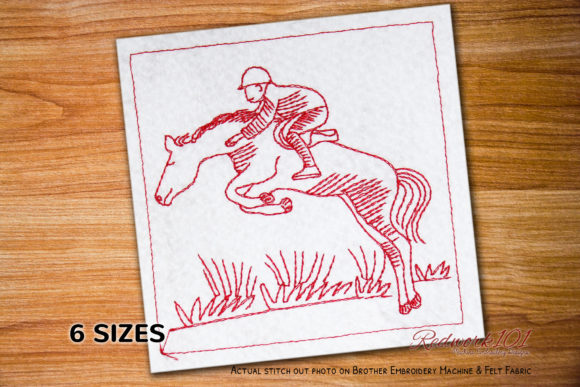
The mood here is energetic yet classic. The silhouette of the horse mid-jump with the jockey leaning forward captures motion without needing complex shading or thousands of stitches. In the world of Embroidery, sometimes less is significantly more. This layout feels intentional, designed to be read quickly from a distance, which is crucial for items like caps or patches where detail can easily get muddy.
Real-World Application: The Boutique Sweatshirt Test
To truly evaluate this asset, I imagined a specific scenario: a small shop owner preparing a limited run of custom sweatshirt embroidery for a local equestrian club. They need something that looks professional but doesn't overwhelm the garment with heavy density. This is where Jumping Horse and Jockey Redwork shines. Because it relies on outline techniques rather than dense fill areas, it sits beautifully on thicker fabrics like French terry or fleece without causing puckering or stiffness.
If you are an Etsy seller or run a craft business, versatility is your currency. I can see this design working exceptionally well on a canvas tote bag design. The clean lines of the redwork style pop against natural cotton, creating a high-contrast look that feels handmade and artisanal. It also translates well to baby embroidery; imagine a onesie or a nursery blanket featuring this jumping scene. It's gentle enough for infants yet dynamic enough to be interesting. However, if you are planning to use this for holiday embroidery gifts, perhaps pairing it with a festive border, remember that the simplicity of redwork allows it to blend with other seasonal motifs without clashing.
Navigating Fabric Textures and Hoop Constraints
While the design is robust, practical judgment is required regarding fabric choice. Redwork typically utilizes running stitches or light satin borders. On textured fabrics like waffle weave towels or rough linen, these fine lines can sometimes get lost or appear jagged. If you are stitching this onto a custom apparel item made from stretchy jersey, you must use a high-quality cut-away stabilizer. Without it, the movement of the fabric could distort the horse's legs or the jockey's posture over time, especially after frequent washing.
Another critical factor is the hoop size. While the exact dimensions aren't listed in the basic description, the visual proportion suggests it fits comfortably in a standard 4x4 or 5x7 hoop. If you intend to place this on a curved surface like a cap, ensure the design isn't too wide, or the edges might wrap awkwardly around the crown. For embroidered patch creation, this design is a strong contender. The clear outlines make it easy to digitize a merrow edge around it later, provided you check the stitch density at the outermost points to ensure they don't fray.
Visual Appeal and Commercial Viability
The value of a digital embroidery file lies in how it elevates the finished product. This design brings a sense of heritage and sportiness simultaneously. For a boutique branding project, using a single thread color (like a deep crimson or navy) creates a cohesive, sophisticated look that screams "quality" rather than "mass-produced." Customers trust designs that look deliberate. A cluttered design often signals amateur work, whereas the clean execution of Jumping Horse and Jockey Redwork suggests a thoughtful handmade product.
However, there is a specific note in the product description that requires our attention: "The Box Stitch shown in picture is optional. The color of outer Box is different color in most of the designs unless it is part of the design itself, you can skip the." This is a vital detail for commercial users. If you are selling this as a small shop product, you need to decide immediately if the box frame adds value or distraction. In many cases, removing the box allows the horse and jockey to breathe, making the design more adaptable for placement on pockets, sleeves, or irregular spaces. If you keep the box, ensure your thread colors contrast sharply; otherwise, the framing effect is lost.
Essential Designer Notes for Best Results
Before committing this design to a client's order or listing it as a design asset, I recommend a few rigorous tests. First, always stitch out a sample on scrap fabric that matches your final material. Check the corners of the horse's hooves and the jockey's hat; these are high-movement areas where threads might bunch up if the tension isn't perfect. Second, review the design in black and white on your screen. If the details disappear in grayscale, the contrast might be too low for certain fabric backgrounds.
Pay close attention to the licensing terms. Since this is a commercial embroidery context, confirm whether the license allows you to sell the physical stitched items or if there are restrictions on the number of units. Never assume; always verify before listing on marketplaces. Additionally, if you plan to offer this as a printable mockup for digital sales, ensure you have edited out any watermarks or optional box stitches that might confuse the buyer.
Ultimately, Jumping Horse and Jockey Redwork is a reliable tool in a designer's kit. It bridges the gap between traditional craftsmanship and modern sports aesthetics. Whether you are decorating an apron for a kitchen enthusiast, creating a personalized gift for a riding instructor, or stocking inventory for a craft fair, this design offers a clean, professional result. Just respect the nuances of your fabric, choose your stabilizer wisely, and let the simplicity of the redwork style do the heavy lifting for your brand.